
Related Videos
Page 3 of 3
Each country is likely to have a national association for counselling. In the UK, there is a wealth of information on British Association for Counselling and Psychotherapy www.bacp.co.uk.
For a general counselling book, the key reading is Velleman, R. and Aris, S. (2010) Counselling and Helping: Psychology in Action. London: Wiley Blackwell / British Psychological Society. ISBN-10: 1405106107; ISBN-13: 978-1405106108
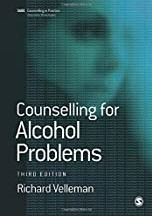
For practitioners working in the alcohol area, the key reading is Counselling for Alcohol Problems (Therapy in Practice) by Richard D B Velleman | 18 Jan 2011
The competency framework is an essential resource for 5-Step Method training and practice. It covers 35 skills which ensure that trained practitioners can become, and remain, competent and confident users of the 5-Step Method – these are summarised in the diagram below and in the video presentation. Please see the Template and Guidance in Guidance, Handbooks & Other Reading
Click here for the Practitioner Competency Form
5-Step Method Competency Framework
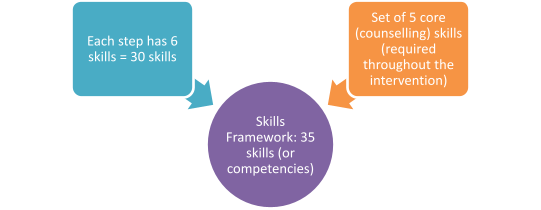
© The Competency Skills Framework is copyrighted to AFINet – it cannot be reprinted, reproduced, photocopied, altered or utilised in any form or by any electronic, mechanical or other means invented, without prior permission in writing from AFINet. The skills framework should not be used by, copied or shared with people who have not been trained to use the 5-Step Method – an exception would be the person who is supervising or managing your work if they are not themselves a 5-Step Method practitioner.
There are variations to the skills framework for some of the different versions of the 5-Step Method that are available – you will have been given the correct one for whichever version[s] of the intervention you are using. These different versions of the skills framework will be added to the website in due course.